

Across the globe, there are places so powerful, beautiful, and historically important that they belong not to one country, but to all of humanity. These locations are officially recognized as World Heritage Sites by UNESCO, an international body that works to protect cultural and natural treasures for future generations.
World Heritage Sites include ancient monuments, historic cities, sacred temples, engineering marvels, and breathtaking natural landscapes. They tell the story of human civilization—our beliefs, struggles, achievements, and connection with nature. From wonders built thousands of years ago to symbols of modern freedom, these sites reflect the shared history of the world.
We explore the Top 5 Most Famous World Heritage Sites in the World—places that attract millions of visitors every year and continue to shape global culture and identity.
1. Taj Mahal, India


The Taj Mahal, located in Agra, India, is one of the most famous and visited World Heritage Sites in the world. Recognized by UNESCO in 1983, the Taj Mahal stands as a timeless symbol of love, architectural brilliance, and India’s rich cultural history.
Built in the 17th century by Mughal Emperor Shah Jahan, the Taj Mahal was constructed in memory of his beloved wife Mumtaz Mahal. Her death during childbirth deeply affected the emperor, leading him to commission a monument that would represent eternal love. Today, the Taj Mahal is not just a historical structure—it is an emotional landmark admired across the globe.
The Taj Mahal is made entirely of white marble, sourced from Makrana in Rajasthan. What makes it truly remarkable is its perfect symmetry, intricate carvings, and detailed inlay work using semi-precious stones. The central dome, minarets, gardens, and reflecting pools follow a precise geometric balance that reflects the peak of Mughal architecture.
As sunlight changes throughout the day, the Taj Mahal appears to shift in color—soft pink at dawn, bright white at noon, and golden under moonlight. This visual transformation adds to its magical appeal and draws photographers and travelers from every corner of the world.
Each year, more than seven million visitors travel to Agra to see the Taj Mahal, making it one of the most visited monuments on Earth. It plays a major role in India’s tourism economy and remains a top destination for international travelers.
Beyond tourism, the Taj Mahal holds deep cultural and historical value. It reflects India’s artistic heritage, Islamic architecture, and the emotional depth of human relationships. The monument has also been featured in countless films, books, and documentaries, further strengthening its global identity.
Despite its beauty, the Taj Mahal faces environmental challenges, including air pollution and changes in the Yamuna River ecosystem. To protect the monument, the Indian government has imposed strict rules on nearby industries, vehicle movement, and visitor management. Conservation efforts continue to ensure that the Taj Mahal remains preserved for future generations.
The Taj Mahal is more than a tourist attraction—it is a global symbol of heritage that connects history, art, and emotion. Its message of love and remembrance continues to resonate across cultures and generations, making it one of the most powerful World Heritage Sites in the world.
2. Great Wall of China, China


The Great Wall of China is one of the most famous and powerful World Heritage Sites in the world. Stretching across mountains, deserts, and grasslands in northern China, the Great Wall is a true symbol of human determination, military strategy, and ancient engineering. UNESCO recognized it as a World Heritage Site in 1987.
Built more than 2,000 years ago, the Great Wall was not constructed in a single period. Instead, it was built, rebuilt, and expanded by several Chinese dynasties to protect their kingdoms from invasions by nomadic tribes from the north.
Construction of the Great Wall began as early as the 7th century BC, but the most well-known sections were built during the Ming Dynasty (1368–1644). These sections used stone and brick, making them stronger and more durable than earlier versions made from earth and wood.
The wall stretches over 13,000 miles (21,000 kilometers), making it the longest man-made structure ever built. Along the wall are thousands of watchtowers, fortresses, and beacon towers that were used to send smoke and fire signals during enemy attacks.
What makes the Great Wall truly remarkable is how it was built across extremely difficult terrain. It climbs steep mountains, crosses deep valleys, and runs through harsh deserts. Ancient builders used local materials such as stone, earth, and bricks, adapting construction methods to the surrounding landscape.
The wall was not just a physical barrier. It also served as a transportation route, a communication system, and a border control point for trade and travel along ancient routes, including parts of the Silk Road.
Today, the Great Wall of China is one of the most visited tourist attractions in the world. Popular sections like Badaling and Mutianyu attract millions of visitors every year. Travelers from across the globe come to walk along the wall and experience its breathtaking views and historical importance.
The Great Wall has become a global symbol of China’s history and cultural identity. It is frequently featured in documentaries, movies, textbooks, and international media as a reminder of ancient civilization’s ability to achieve extraordinary feats.
Despite its strength, large parts of the Great Wall are under threat from natural erosion, weather damage, and human activity. Urban development and tourism pressure have also caused damage in some areas.
The Chinese government and cultural organizations are actively working on preservation projects to protect remaining sections of the wall. Restoration, restricted access, and public awareness campaigns aim to ensure the Great Wall survives for future generations.
The Great Wall of China is more than an ancient defense structure. It represents perseverance, unity, and long-term vision. Its sheer scale reminds the world what human cooperation and ambition can achieve, even without modern technology.
3. Machu Picchu, Peru


The Machu Picchu is one of the most mysterious and breathtaking World Heritage Sites in the world. Located high in the Andes Mountains of Peru, this ancient Incan city sits nearly 8,000 feet above sea level and is surrounded by dramatic mountain peaks and deep valleys. UNESCO declared Machu Picchu a World Heritage Site in 1983, recognizing its cultural, historical, and architectural importance.
Often called the “Lost City of the Incas,” Machu Picchu is a powerful symbol of South America’s rich ancient history and continues to attract millions of visitors from around the globe.
Machu Picchu was built in the 15th century during the reign of Incan emperor Pachacuti. Historians believe it served as a royal estate, religious center, or ceremonial city. Surprisingly, the Spanish never discovered Machu Picchu during their conquest, allowing it to remain hidden from the outside world for centuries.
The site became known internationally in 1911, when American historian Hiram Bingham brought global attention to the ruins. Since then, Machu Picchu has become one of the most important archaeological discoveries of modern times.
One of the most impressive aspects of Machu Picchu is its construction. The Incas built massive stone structures without the use of metal tools, wheels, or modern machinery. Stones were cut so precisely that they fit together without mortar, making the buildings extremely stable—even during earthquakes.
The city includes temples, homes, agricultural terraces, stairways, and water channels. The advanced drainage system prevented flooding and erosion, proving the Incas’ deep understanding of engineering and nature. The terraces not only supported farming but also helped stabilize the steep mountain slopes.
Machu Picchu is not just an architectural wonder—it is also set within a stunning natural environment. Covered in mist during early mornings and surrounded by lush green mountains, the site feels almost magical. Many historians believe the Incas chose this location for spiritual reasons, aligning temples with the sun, stars, and surrounding peaks.
Landmarks such as the Temple of the Sun and the Intihuatana stone demonstrate the Incas’ profound connection to astronomy and religion. These features suggest that Machu Picchu played a key role in spiritual ceremonies and seasonal rituals.
Today, Machu Picchu is one of the most visited tourist destinations in South America and a major contributor to Peru’s tourism economy. Travelers reach the site through hiking routes like the famous Inca Trail or by train from the city of Cusco.
Due to its popularity, strict visitor limits and time slots have been introduced to protect the ruins from damage caused by overcrowding. These measures aim to strike a balance between tourism and preservation.
Machu Picchu faces challenges from climate change, landslides, and heavy foot traffic. Conservation efforts focus on protecting both the ancient structures and the surrounding ecosystem. UNESCO and Peruvian authorities work together to ensure sustainable tourism and long-term preservation.
Machu Picchu remains one of the most powerful reminders of ancient human achievement. It represents intelligence, harmony with nature, and cultural identity.
4. Pyramids of Giza, Egypt


The Pyramids of Giza are among the most famous and mysterious World Heritage Sites on Earth. Located on the outskirts of Cairo, Egypt, these monumental structures have stood for more than 4,500 years. Recognized by UNESCO as a World Heritage Site in 1979, the Pyramids of Giza remain the only surviving wonder of the Seven Wonders of the Ancient World.
They represent the power, religious beliefs, and advanced knowledge of ancient Egyptian civilization and continue to fascinate historians, scientists, and travelers from around the world.
The Pyramids of Giza were constructed as royal tombs for three Egyptian pharaohs of the Fourth Dynasty: Khufu, Khafre, and Menkaure. The largest and most famous, the Great Pyramid of Khufu, was originally over 480 feet tall and was the tallest man-made structure in the world for nearly 4,000 years.
Ancient Egyptians believed strongly in the afterlife. The pyramids were designed to protect the pharaohs’ bodies and treasures, ensuring their journey to eternal life. Inside the pyramids are chambers, passageways, and burial rooms that still amaze researchers today.
What makes the Pyramids of Giza truly extraordinary is the engineering skill used to build them. Each pyramid is made of millions of massive limestone blocks, some weighing several tons. These stones were cut, transported, and placed with incredible precision—without modern machinery.
The exact construction methods are still debated, adding to the mystery of the pyramids. Their perfect alignment with the cardinal directions and their connection to astronomy suggest advanced scientific knowledge far ahead of their time.
Near the pyramids stands the Great Sphinx, a massive statue with the body of a lion and the head of a pharaoh. It is believed to represent Pharaoh Khafre and served as a symbolic guardian of the sacred burial site. The Sphinx adds another layer of mystery and cultural significance to the Giza complex.
The Pyramids of Giza are one of the most visited tourist attractions in the world. Millions of people travel to Egypt each year to witness these ancient monuments up close. They have influenced architecture, art, and popular culture for centuries and continue to appear in books, films, and documentaries worldwide.
Urban expansion, pollution, and tourism pressure pose challenges to the preservation of the pyramids. Egyptian authorities, along with international organizations, are working to protect the site through conservation projects, visitor management, and sustainable tourism efforts.
The Pyramids of Giza are more than ancient tombs—they are a testament to human ambition, faith, and innovation. Their survival across thousands of years makes them one of the most important cultural landmarks in history.
5. Colosseum, Italy


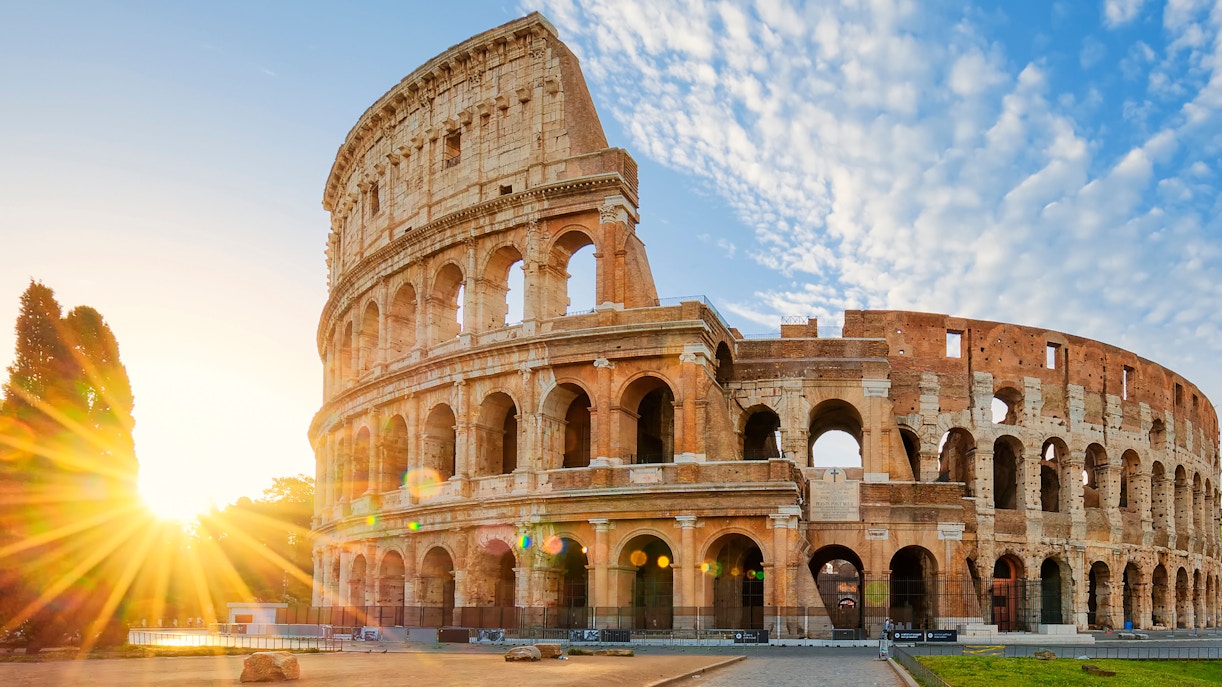
The Colosseum, located in the heart of Rome, Italy, is one of the most famous World Heritage Sites in the world. Built nearly 2,000 years ago, this massive stone amphitheater stands as a powerful reminder of the strength, ambition, and culture of the ancient Roman Empire. UNESCO listed the Colosseum as a World Heritage Site in 1980, recognizing its global historical importance.
Today, the Colosseum is not only Italy’s most visited monument but also one of the most recognizable landmarks in human history.
Construction of the Colosseum began in AD 72 under Emperor Vespasian and was completed in AD 80 by his son Titus. The structure was designed to host large public events, including gladiator fights, animal hunts, executions, and dramatic performances. At its peak, the Colosseum could hold more than 50,000 spectators.
These events were not just entertainment; they were used by Roman emperors to display power, reinforce social order, and gain public support. The Colosseum became a central place where politics, culture, and public life came together.
The Colosseum was far ahead of its time in design and construction. Built using concrete, limestone, and volcanic stone, it featured a complex system of arches, tunnels, and stairways that allowed crowds to enter and exit quickly.
Below the arena floor was the hypogeum, an underground network of chambers and elevators used to hold animals and gladiators before battles. Wooden platforms and trapdoors allowed dramatic entrances, making the events more intense and theatrical.
Despite earthquakes, fires, and centuries of stone removal, much of the Colosseum still stands strong today—proof of Roman engineering brilliance.
Over the centuries, the Colosseum has become a global symbol of ancient Rome. It appears in history books, films, documentaries, and travel media worldwide. More than six million tourists visit the Colosseum each year, making it one of Europe’s most popular attractions.
Beyond tourism, the monument has influenced modern stadium design and remains a powerful reference point for architecture and urban planning.
The Colosseum has faced many challenges, including pollution, natural aging, and heavy tourist traffic. Restoration projects led by Italian authorities aim to protect the structure while allowing public access. Strict visitor rules and conservation efforts help ensure the Colosseum survives for future generations.
The Colosseum is more than an ancient arena. It tells the story of Roman society—its entertainment, politics, violence, and innovation. It reminds the modern world of how public spaces shape culture and power.
The Taj Mahal, the Great Wall of China, Machu Picchu, the Pyramids of Giza, and the Colosseum represent the very foundation of world heritage. These iconic landmarks were built in different parts of the world and in different time periods, yet they share one powerful connection: they reflect the greatest achievements of human civilization.
From the emotional story of love behind the Taj Mahal to the unmatched scale of the Great Wall of China, each site shows how humans used creativity, intelligence, and determination to leave a lasting mark on history. Machu Picchu highlights harmony with nature, the Pyramids of Giza demonstrate ancient scientific knowledge, and the Colosseum reveals how public life and power shaped societies.
Together, these five World Heritage Sites remind us why preserving history matters. They are not just ruins or monuments—they are lessons from the past that continue to inspire the present and guide the future.

